Bees, butterflies and the gardens that feed them
Our pollinators need flowers from March through to November. Here’s what they’re looking for, and how a single square metre of your garden can help.
3 million
flowers can thrive on a single acre in Summer
1 kg
of nectar sugar can be produced in one day
96,000
honey bees can feed on this — every day
Figures for a single summer day on one acre of wildflower meadow, as reported by WWF’s wildflower campaign.
Why wildflowers, specifically
Bees, butterflies, hoverflies and moths don’t feed on one flower — they feed on a succession of them. A native wildflower mix opens in waves across the season, so there’s nectar in April when queens emerge and still nectar in September when the last butterflies are stocking up.
Bedding plants, by contrast, often bloom all at once, and many ornamental doubles carry no usable nectar at all. Native means edible.
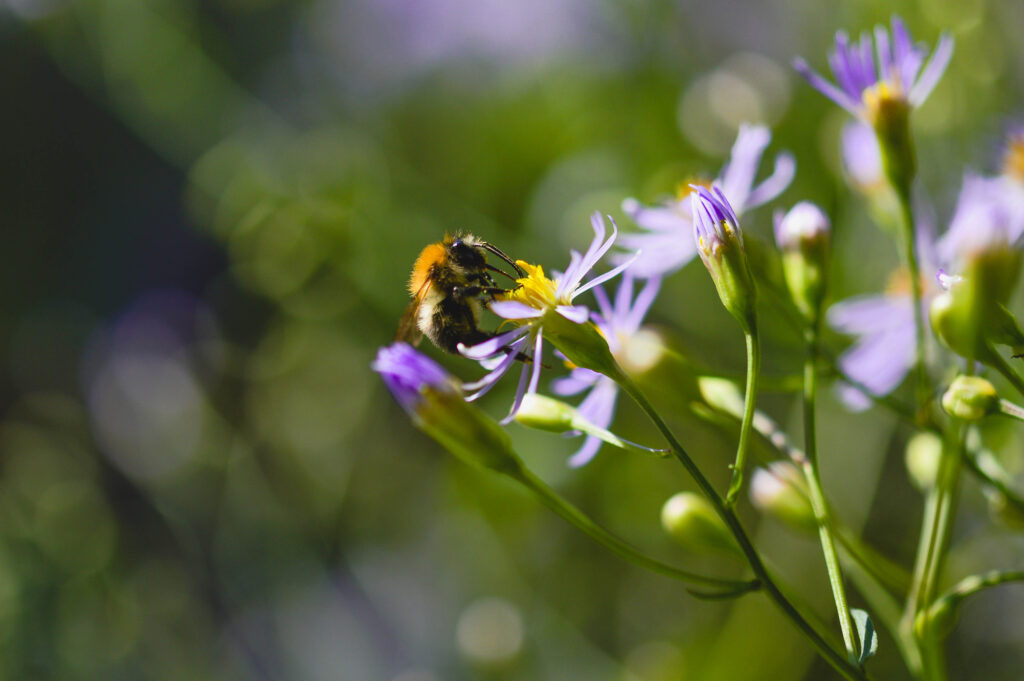
Wildlife friendly products
Bees
View our range of bee-friendly seed balls.
Butterflies
View our range of butterfly-friendly seed balls.
A corridor across Sussex
Pollinators travel further than most people expect. Individually, a pot of wildflowers is a snack; joined up along a street, it’s a feeding route. Adur & Worthing Council now map the green spaces they’ve handed back to wildflowers — worth a look before you choose your mix.
Mow less, later
Leaving a patch uncut until late summer costs nothing and feeds everything.
Water, in the shade
A shallow dish with pebbles gives bees a safe landing in hot weather.
Plant for the gaps
Aim at early spring and late autumn — the two points where nectar runs out.
Know your visitors
Four pollinators you’re most likely to meet in a Sussex garden — and the flowers that will bring them in.
Queens emerge hungry and early, weeks before most garden plants open.
Loves: Red clover, knapweed, vetch
Over 250 UK species, most nesting in bare soil or hollow stems rather than hives.
Loves: Ox-eye daisy, birds-foot trefoil
Need nectar for adults and the right leaves for caterpillars — both, or neither works.
Loves: Field scabious, yarrow, sorrel
The unsung shift — moths pollinate overnight, hoverflies eat aphids by day.
Loves: Wild carrot, campion, cowslip